Categories AI Integration, Generative AI, Generative Artificial Intelligence

Cost-Efficient Agentic AI Workflows For Complex Document Analysis

Cost-Efficient Agentic AI Workflows For Complex Document Analysis

How CloudFountain Built Cost-Efficient Agentic AI Workflows for Complex Document Analysis

Processing thousands of contracts, invoices, compliance reports, and business documents every month can quickly become expensive when every task relies on premium AI models. A professional services organization approached CloudFountain with a challenge: improve document intelligence capabilities while reducing operational and AI processing costs.

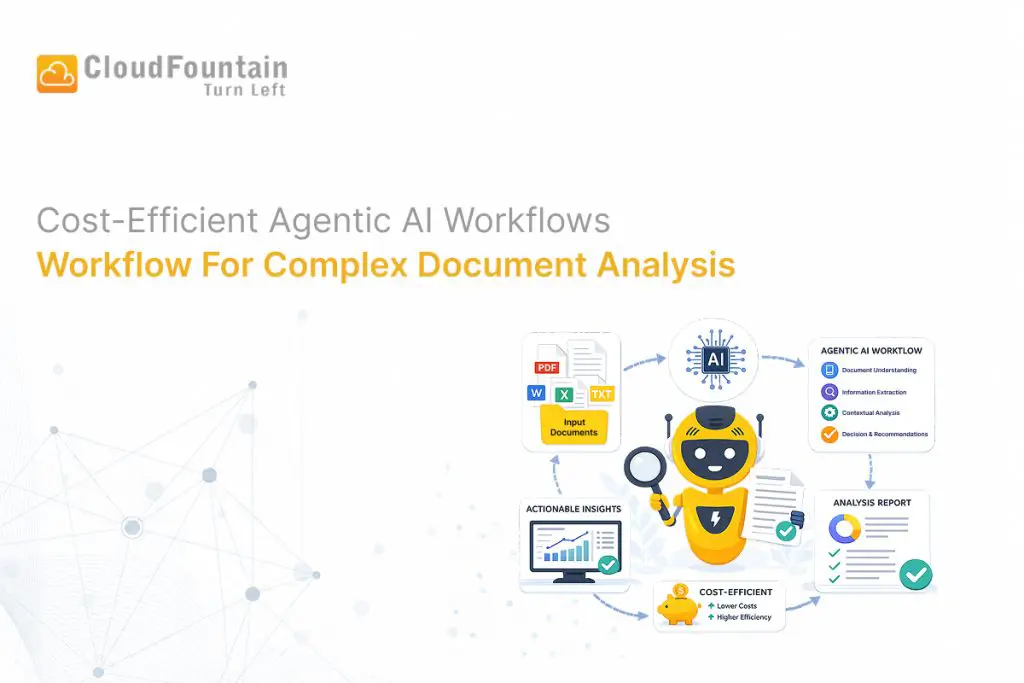
CloudFountain designed and implemented a cost-efficient Agentic AI workflow that combined deterministic automation, intelligent model routing, and tiered AI reasoning. Instead of sending every task to a large language model, the system first identified which activities could be completed using traditional software logic and only invoked AI when genuine reasoning was required.

Scaling Agentic AI Workflows Without Scaling Costs

As enterprise organizations move beyond initial AI experiments, they face a common hurdle: the “scalability gap.” While Generative AI is powerful, relying solely on premium, general-purpose LLMs for high-volume document analysis is often financially unsustainable. The true path to enterprise AI maturity lies in Agentic AI workflows—systems designed not just to “talk” to data, but to intelligently route tasks based on complexity.

By moving from a “model-first” to a “workflow-first” strategy, businesses can automate complex document intelligence while achieving significant cost-efficiency and performance gains.

The Challenge

The client processed more than 2,000 business documents every month, including invoices, contracts, proposals, and compliance reports. Manual review created delays, increased costs, and introduced accuracy issues. At the same time, relying exclusively on premium AI models would have made large-scale document processing financially unsustainable.

The Solution

CloudFountain implemented a deterministic-first architecture designed to minimize unnecessary AI usage while maintaining high-quality outcomes.

  • Automated document parsing and extraction using specialized tools
  • Schema validation and document completeness checks without AI
  • Conditional AI routing based on document complexity
  • Tiered model selection for cost optimization
  • Prompt caching and batch processing for reduced token consumption
  • Agent-based workflows for advanced reasoning and decision support

How the Agentic Workflow Operated

The workflow began with deterministic processing layers that extracted data, validated formats, and checked document completeness. Only documents requiring interpretation, scoring, risk assessment, or business recommendations were routed to AI models.

Simple tasks were handled by low-cost models, while advanced reasoning scenarios were escalated to more capable models. This intelligent routing strategy significantly reduced overall AI expenses without sacrificing accuracy.

Results Achieved

  • 80% reduction in document processing costs
  • 99% document extraction accuracy
  • 70% reduction in manual review effort
  • 85–95% straight-through document processing
  • Significant reduction in AI token consumption
  • Faster turnaround times across document workflows

Business Impact

By combining deterministic automation with Agentic AI, the client transformed document processing from a costly manual operation into a scalable intelligence platform. Teams gained faster access to insights, reduced operational overhead, and improved consistency across business-critical workflows.

The engagement demonstrated that successful AI adoption is not about using the largest model for every task. The greatest value comes from designing intelligent workflows that use the right technology at the right stage of the process. We have applied these same principles of intelligent routing to other complex sectors, including the insurance industry, where we successfully implemented AI-powered lead scoring and agentic workflows to drive conversion.

Agentic AI architecture for document analysis can assist in manual operations.

Key Strategies for Building Agentic AI Architecture

Successfully transitioning to a cost-efficient AI model requires more than just picking a technology—it requires a shift in how you handle data and decisions. Based on our work, here are the foundational pillars that allow organizations to scale AI without increasing their operational budget:

  • Implement a Deterministic-First Strategy: Ensure that standard data extraction, formatting, and validation tasks are handled by traditional code. AI should only be triggered for tasks that require high-level reasoning.
  • Establish Intelligent Model Routing: Not every query requires a frontier model. Build routing logic that directs simple tasks to lightweight, low-cost models and reserves expensive, powerful models for complex, high-stakes decision-making.
  • Leverage Prompt Caching: By caching frequently used instructions and context, you can significantly reduce the number of tokens processed, leading to immediate savings in API costs.
  • Utilize Schema Validation: Use rigid document schemas to catch errors before they reach the AI. This prevents costly “hallucinations” or incorrect extractions that would otherwise require manual human correction.
  • Design for Modular Reasoning: Break large document analysis tasks into smaller, manageable “agentic” steps. This allows you to audit each part of the workflow and optimize individual components for both cost and accuracy.

Conclusion

CloudFountain’s cost-efficient Agentic AI architecture helped the client reduce costs, improve accuracy, and scale document analysis operations without increasing headcount. By combining automation, intelligent model routing, and advanced AI reasoning, organizations can unlock the full value of document intelligence while maintaining complete control over operational expenses.

How AI-Ready Is Your Organization?

Don’t just guess—know. Take our quick AI Readiness Quiz to assess your organization’s data maturity, infrastructure, and technical foundation. In just a few minutes, you’ll receive actionable insights to help you identify gaps and accelerate your path to implementing secure, efficient, and ROI-driven AI solutions.
Take the Quiz

Categories AI Integration, Artificial Intelligence, Generative AI, HIPAA Compliance

How CloudFountain Helped a Medical Insurance Company Improve Medical Coding Accuracy Using AI

How CloudFountain Helped a Medical Insurance Company Improve Medical Coding Accuracy Using AI

Medical coding plays a critical role in healthcare claims processing. Accurate coding ensures faster claim approvals, reduces reimbursement delays, improves compliance, and minimizes costly denials.

However, coding healthcare claims is becoming increasingly complex. Coding specialists must navigate intricate relationships between clinical documentation, ICD-10 codes, CPT procedures, HCPCS classifications, modifiers, payer-specific requirements, and historical adjudication outcomes.

A leading medical insurance organization partnered with CloudFountain to address these challenges through an AI-powered medical coding training and decision-support platform. The result was improved coding consistency, faster analyst onboarding, reduced claim denials, and a more scalable training framework.

Client Overview

The client is a medical insurance organization responsible for managing large volumes of healthcare claims across multiple providers, specialties, and procedure categories.

As claim volumes increased, maintaining coding quality and training new coding analysts became increasingly difficult. The organization required a smarter approach that could standardize coding decisions while supporting compliance and audit readiness.

The Challenge

Medical coding teams faced several operational and quality-related challenges.

Lengthy Training Cycles

New coding analysts required extensive manual training before becoming fully productive. This created onboarding bottlenecks and increased dependence on senior specialists.

Inconsistent Coding Decisions

Different coders often interpreted similar clinical documentation differently, resulting in inconsistent claim outcomes and varying coding quality.

Incomplete Clinical Documentation

Clinical notes frequently lacked important supporting details required for accurate code selection. Missing information often led to coding errors and claim rework.

Coding Errors and Denials

Incorrect ICD-10, CPT, HCPCS, or modifier selections increased claim denials, reimbursement delays, and administrative overhead.

Overloaded Senior Reviewers

Experienced coding specialists spent significant time answering repetitive questions and reviewing routine coding decisions rather than focusing on high-value cases.

Static Training Processes

Traditional training materials could not adapt to changing payer requirements, denial trends, or historical claim outcomes.

The organization needed an AI solution that could enhance training and coding quality without replacing certified coding professionals.

Why Traditional Medical Coding Training Falls Short

Healthcare coding requires more than memorizing code sets.

Coders must understand:

  • Clinical terminology
  • Diagnosis relationships
  • Procedure documentation
  • Payer-specific rules
  • Medical necessity requirements
  • Historical denial patterns

Traditional training methods often struggle to provide personalized learning experiences or real-time feedback during coding decisions.

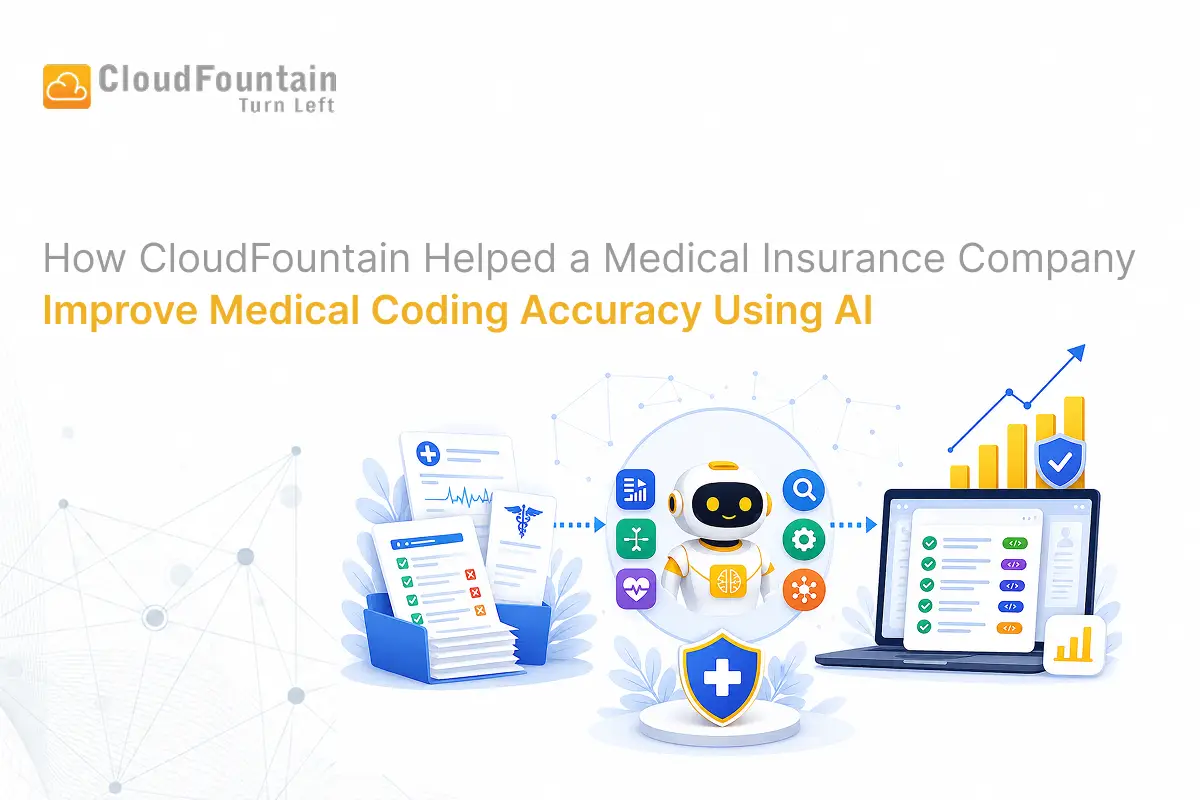
Medical coding audit

CloudFountain’s AI-Powered Medical Coding Solution

CloudFountain developed an AI-enabled training and decision-support framework designed specifically for medical coding teams.

The platform analyzed:

  • Clinical notes
  • Historical claims data
  • Payer rules
  • Denial trends
  • Approved coding examples

Key Components of the Solution

Clinical Text Understanding

The first step involved advanced Natural Language Processing (NLP).

The system extracted critical healthcare concepts from clinical documentation, including:

  • Diagnoses
  • Procedures
  • Symptoms
  • Medications
  • Provider notes
  • Supporting evidence

Medical Code Recommendation Engine

The recommendation engine analyzed documentation patterns and historical claims intelligence to suggest:

  • ICD-10 codes
  • CPT codes
  • HCPCS codes
  • Appropriate modifiers

AI-Powered Training Mode

CloudFountain created an interactive learning environment for coding analysts.

Documentation Gap Detection

The AI automatically flagged situations where selected codes lacked sufficient supporting evidence.

Denial Pattern Learning

The platform continuously analyzed historical denied claims to identify recurring issues such as documentation deficiencies and payer-specific rule mismatches.

Human-in-the-Loop Validation

CloudFountain designed the system with governance and compliance in mind, allowing experts to approve, reject, or modify recommendations.

Results Achieved

  • 35% Faster New Coder Training
  • 28% Improvement in Coding Review Accuracy
  • 40% Reduction in Senior Reviewer Effort
  • 22% Reduction in Repeat Coding-Related Denials

Key Takeaways for Healthcare Organizations

  • AI should support certified coders rather than replace them.
  • Explainable recommendations improve user trust and adoption.
  • Documentation gap detection reduces downstream claim issues.
  • Human-in-the-loop governance ensures compliance and audit readiness.

The Future of AI in Medical Coding

As healthcare data continues to grow, coding complexity will increase. Organizations that combine AI with experienced coding expertise will be better positioned to manage growing claim volumes.

Conclusion

CloudFountain helped a medical insurance company modernize its coding training and review process through an AI-powered decision-support framework. For healthcare organizations seeking to improve coding quality and operational efficiency, AI-assisted medical coding offers a practical path to better outcomes.

How AI-Ready Is Your Organization?

Don’t just guess—know. Take our quick AI Readiness Quiz to assess your organization’s data maturity, infrastructure, and technical foundation. In just a few minutes, you’ll receive actionable insights to help you identify gaps and accelerate your path to implementing secure, efficient, and ROI-driven AI solutions.
Take the Quiz

Categories AI Integration

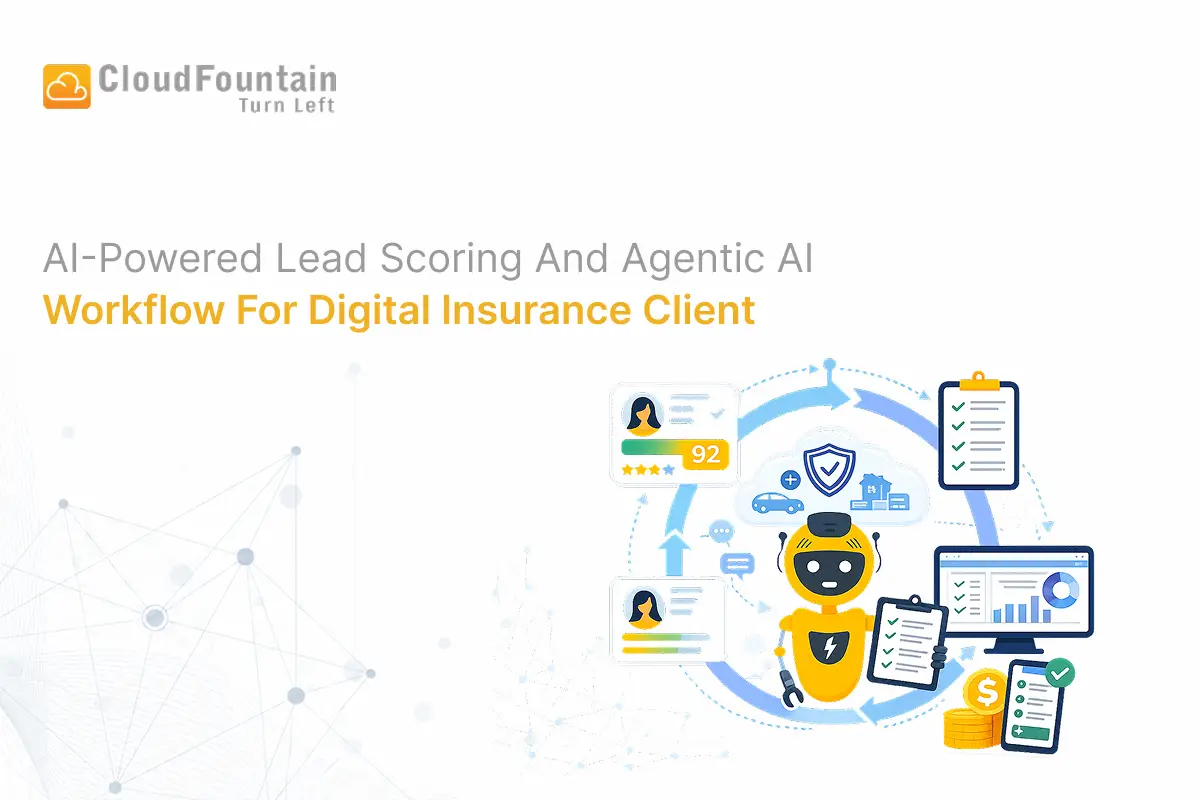
AI-Powered Lead Scoring And Agentic AI Workflow For Digital Insurance Client

AI-Powered Lead Scoring And Agentic AI Workflow For Digital Insurance Client

How AI-Powered Lead Scoring Transformed Insurance Approvals

For digital insurance companies, lead quality directly impacts revenue. Poor-quality leads often result in lower approval rates, wasted marketing spend, and slower policy issuance. Traditional rule-based qualification systems often fail to identify complex risk patterns hidden within customer data.

A leading digital insurance brokerage partnered with CloudFountain to modernize its lead qualification process through AI-powered lead scoring and an agentic AI workflow. The result was a dramatic increase in approval rates, faster decision-making, and significantly improved conversion performance.

The Challenge

The client was experiencing several operational challenges that limited growth and efficiency:

  • Low lead-to-policy conversion rates
  • Manual lead qualification processes
  • High operational costs from human review
  • Complex underwriting requirements
  • Difficulty identifying high-intent prospects
  • Compliance and data privacy concerns

Traditional scoring models relied on static rules and historical assumptions, making it difficult to adapt to changing market conditions and customer behavior.

Benefits of AI-Powered Lead Scoring for Insurance Companies

As competition increases across the insurance industry, AI-powered lead scoring is becoming an essential capability for organizations looking to improve sales performance, underwriting efficiency, and customer acquisition. Rather than relying on fixed qualification rules, AI models continuously analyze new data, identify patterns, and predict which prospects are most likely to convert into profitable policyholders.

By integrating AI-powered lead scoring directly into the lead qualification process, insurance companies can prioritize high-value opportunities, reduce time spent reviewing low-quality submissions, and make faster, more informed decisions. When combined with agentic AI workflows, these systems continuously learn from real-world outcomes, enabling organizations to improve performance over time without extensive manual intervention.

  • Improve lead prioritization using predictive analytics
  • Increase policy approval and placement rates
  • Reduce manual underwriting and qualification effort
  • Deliver faster responses to prospective customers
  • Optimize marketing spend by focusing on higher-quality leads
  • Continuously refine scoring models using live performance data
  • Strengthen compliance through automated validation and audit trails

For organizations seeking to modernize insurance operations, AI-powered lead scoring provides a scalable foundation for smarter decision-making, better customer experiences, and sustainable business growth.

CloudFountain designed and deployed a multi-stage AI-powered lead scoring system supported by agentic AI workflows. The solution automated data gathering, qualification, scoring, and reporting while maintaining enterprise-grade security and compliance standards.

CloudFountain’s Solution

CloudFountain designed and deployed a multi-stage AI-powered lead scoring system supported by agentic AI workflows. The solution automated data gathering, qualification, scoring, and reporting while maintaining enterprise-grade security and compliance standards.

1. Intelligent Data Collection Agent

The first AI agent collected and validated lead information from multiple sources in real time.

  • Applicant verification
  • Data enrichment
  • Financial history validation
  • Identity confirmation
  • Data privacy controls
  • Automated compliance checks

2. AI Lead Scoring Agent

The second agent evaluated every lead using machine learning models trained to identify approval likelihood and policy placement potential.

  • Predictive lead scoring
  • Risk assessment modeling
  • Classification algorithms
  • Continuous learning framework
  • Model drift detection
  • Performance monitoring

3. Reporting & Optimization Agent

The reporting agent continuously monitored outcomes and provided actionable insights for optimization.

  • Lead source analysis
  • Conversion tracking
  • Product performance monitoring
  • KPI reporting
  • Operational intelligence
  • Business rule recommendations

Business Results

The implementation generated measurable business impact across the entire lead lifecycle.

  • 300% Increase in Approval Rates
  • 225% Increase in Policy Placement Rates
  • Conversion Rate Improved from Under 2% to Approximately 4.5%
  • 36% Reduction in Lead Cost Per Policy
  • Sub-Second Lead Qualification Decisions
  • Enhanced Security and Compliance Readiness

Why Agentic AI Made the Difference

Unlike traditional automation systems, agentic AI workflows can reason, adapt, and coordinate across multiple business processes. This enabled the insurance company to automate complex decision-making while maintaining accuracy and compliance.

  • Improved decision quality
  • Reduced manual workload
  • Faster response times
  • Better customer experiences
  • Scalable underwriting support
  • Continuous optimization capabilities

Key Takeaways

Organizations evaluating AI for insurance operations can learn several important lessons from this implementation:

  • AI works best when integrated into operational workflows
  • Lead scoring should continuously evolve using real-world outcomes
  • Compliance and security must be built into the solution from day one
  • Agentic workflows outperform static rule-based systems in complex environments
  • Real-time decisioning creates measurable business value

Conclusion

By implementing AI-powered lead scoring and agentic AI workflows, CloudFountain helped a digital insurance company significantly improve approval rates, reduce operational costs, and accelerate policy placement decisions. The solution transformed lead qualification from a manual process into an intelligent, scalable decision engine capable of driving sustainable growth.

How AI-Ready Is Your Organization?

Don’t just guess—know. Take our quick AI Readiness Quiz to assess your organization’s data maturity, infrastructure, and technical foundation. In just a few minutes, you’ll receive actionable insights to help you identify gaps and accelerate your path to implementing secure, efficient, and ROI-driven AI solutions.

Take the Quiz

Categories AI Integration, Artificial Intelligence

Smart AI Implementation: Solving Complex Business Problems

AI is most valuable when it is applied with discipline. Many organizations recognize the potential to automate document-heavy workflows, improve executive decision-making, or accelerate the launch of digital products, but the core challenge rarely lies in selecting a model or hiring developers. Instead, the real hurdle is designing an AI implementation strategy that aligns perfectly with specific business goals.

The following two use cases demonstrate how a practical approach to AI implementation can make technical delivery more affordable, reliable, and useful in day-to-day operations.

The Reality of Modern AI Implementation

Implementing AI is not merely about installing new software; it is about re-engineering how your data works for you. Whether you are aiming to streamline supply chain logistics, enhance customer experience, or automate technical documentation, a smart approach follows three core phases:

  1. Defining the Problem, Not Just the Technology

The most common mistake is starting with the solution. A successful AI implementation begins by identifying a specific, high-friction bottleneck. Are your data silos preventing real-time decision-making? Is your customer support team overwhelmed by repetitive inquiries? By pinpointing the specific problem, you can choose the right AI architecture—whether it is machine learning for predictive analytics or NLP for conversational interfaces.

  1. Data Integrity as the Foundation

AI is only as good as the data it consumes. Before deploying advanced models, organizations must ensure their data is clean, unified, and accessible. Inconsistent or fragmented data leads to “hallucinations” or poor predictive accuracy. Smart implementation starts with robust data governance—ensuring your internal knowledge base is ready to train and support your AI models.

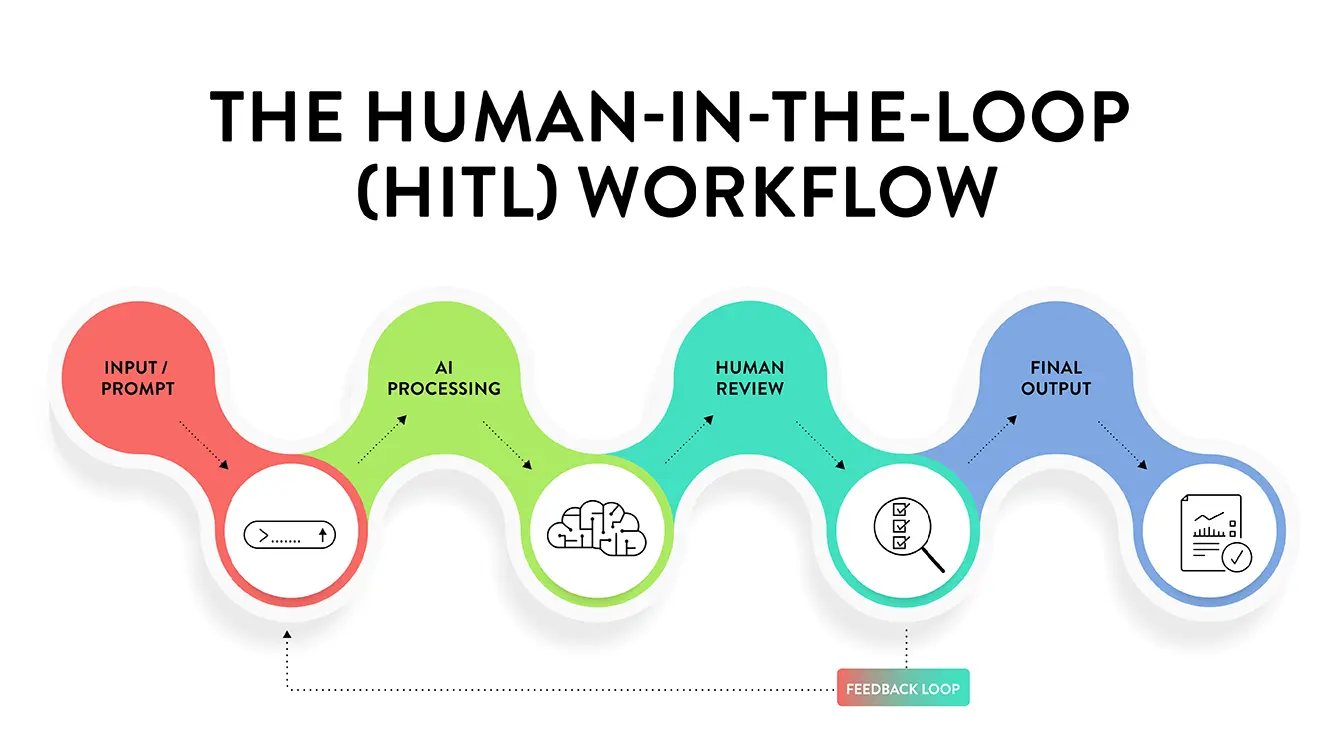
  1. Human-in-the-Loop Integration

The goal of business AI is rarely to replace human intelligence, but to augment it. Your implementation strategy should emphasize a “Human-in-the-loop” (HITL) model. By keeping experts involved in the decision-making loop—especially in high-stakes areas like logistics or enterprise software configuration—you maintain oversight while benefiting from the speed and analytical power of AI.

HITL - Human-in-the-Loop diagram

Key Areas for High-Impact Implementation

Where should your organization prioritize its AI efforts?

  • Predictive Operations: Use AI to anticipate supply chain disruptions or maintenance needs before they occur.
  • Intelligent Automation: Deploy agentic AI systems to handle complex, rule-based tasks across Salesforce or ERP platforms, freeing your team for strategic initiatives.
  • Knowledge Management: Transform vast, unstructured technical documentation into an easily queryable engine, drastically reducing the time spent on research and onboarding.

Proven AI Implementations: Real-World Business Impacts

AI is not just a theoretical concept; it is actively reshaping how organizations operate by solving specific, high-friction problems. Below are examples of how leading companies are leveraging AI implementation to drive efficiency, reduce costs, and improve outcomes.

  1. Banking: Fraud Detection & Risk Management

In the financial sector, where speed and accuracy are critical, AI acts as a 24/7 security layer.

The Problem: Manual monitoring of millions of transactions is prone to human error and latency

The AI Solution: Banks employ advanced machine learning algorithms to analyze transactional patterns in real-time. By identifying anomalies—such as a sudden change in spending behavior or geography—the AI can flag or block potentially fraudulent activity before the transaction is completed.

The Impact: Significant reduction in financial losses, enhanced customer trust, and a dramatic decrease in the manual labor required for fraud investigation.

  1. Human Resources: Scaling Talent Acquisition

HR departments often struggle with high-volume tasks that consume valuable time.

The Problem: Recruiter burnout caused by manually screening hundreds of resumes and coordinating complex interview schedules.

The AI Solution: AI agents are deployed to handle the end-to-end recruitment lifecycle. These systems screen applications against job descriptions to surface the most qualified candidates, automate interview scheduling, and even provide real-time updates to applicants.

The Impact: Accelerated hiring timelines and a 30–40% increase in HR productivity, allowing recruiters to focus on building meaningful relationships with top-tier talent.

  1. Supply Chain & Logistics: Predictive Optimization

Global logistics networks are highly susceptible to disruptions.

The Problem: Reactive planning often leads to costly shortages, overstock, or transit delays.

The AI Solution: Organizations use predictive AI models to analyze data from fleet sensors, weather patterns, and global shipping routes. This allows companies to anticipate demand surges or equipment failures before they manifest as operational bottlenecks.

The Impact: Improved delivery accuracy, reduced operational overhead, and the ability to maintain continuous service even during geopolitical or environmental uncertainties.

  1. Enterprise Operations: Intelligent Knowledge Management

The Problem: Employees spend excessive time searching for information rather than applying it.

The AI Solution: By implementing AI-powered search and summarization tools, companies turn their internal knowledge bases into a queryable engine. An AI agent can pull context from thousands of documents to answer an employee’s question, summarize past project resolutions, or draft policy responses in seconds.

The Impact: Drastic reduction in research and onboarding time, coupled with a higher degree of consistency in how technical issues are addressed across the enterprise.

AI Implementation Frequently Asked Questions

  1. How do I know if my organization is ready for AI implementation? If you have high-friction bottlenecks—such as repetitive manual tasks, fragmented data, or difficulty making real-time decisions—your organization is likely ready to benefit from AI. The key is ensuring your data is clean, unified, and accessible before deploying complex models.
  2. What is the “Human-in-the-loop” (HITL) model, and why is it important? The HITL model keeps human experts involved in the decision-making process to maintain oversight, especially for high-stakes enterprise tasks. It allows businesses to benefit from the speed and analytical power of AI while ensuring that final decisions are vetted by experienced professionals.
  3. What is the most common mistake companies make when starting with AI? The most frequent error is starting with the technology rather than the problem. A successful strategy begins by identifying a specific operational bottleneck, which then dictates the necessary AI architecture—whether that is machine learning, NLP, or agentic systems.
  4. How can AI improve supply chain and logistics operations? AI models can analyze data from fleet sensors, weather patterns, and global shipping routes to predict demand surges or equipment failures. This proactive approach helps organizations avoid costly shortages, overstock, and transit delays.
  5. How does AI assist with enterprise knowledge management? AI-powered search and summarization tools turn vast, unstructured internal documentation into a queryable engine. This allows employees to get instant answers or summaries from thousands of documents, drastically reducing the time spent on research and onboarding.

Why Strategy Matters

Smart AI implementation is an iterative process. It requires constant monitoring, model fine-tuning, and a willingness to scale only after proving value in a controlled environment. By taking a measured, strategic approach, businesses can move beyond the surface-level benefits of AI and fundamentally transform their operational efficiency.

Ready to turn your business challenges into automated successes?

At CloudFountain, we specialize in bridging the gap between cutting-edge technology and real-world business outcomes. Let’s build a roadmap for your AI future.

How AI-Ready Is Your Organization?

Don’t just guess—know. Take our quick AI Readiness Quiz to assess your organization’s data maturity, infrastructure, and technical foundation. In just a few minutes, you’ll receive actionable insights to help you identify gaps and accelerate your path to implementing secure, efficient, and ROI-driven AI solutions.

Take the Quiz

Categories AI Integration

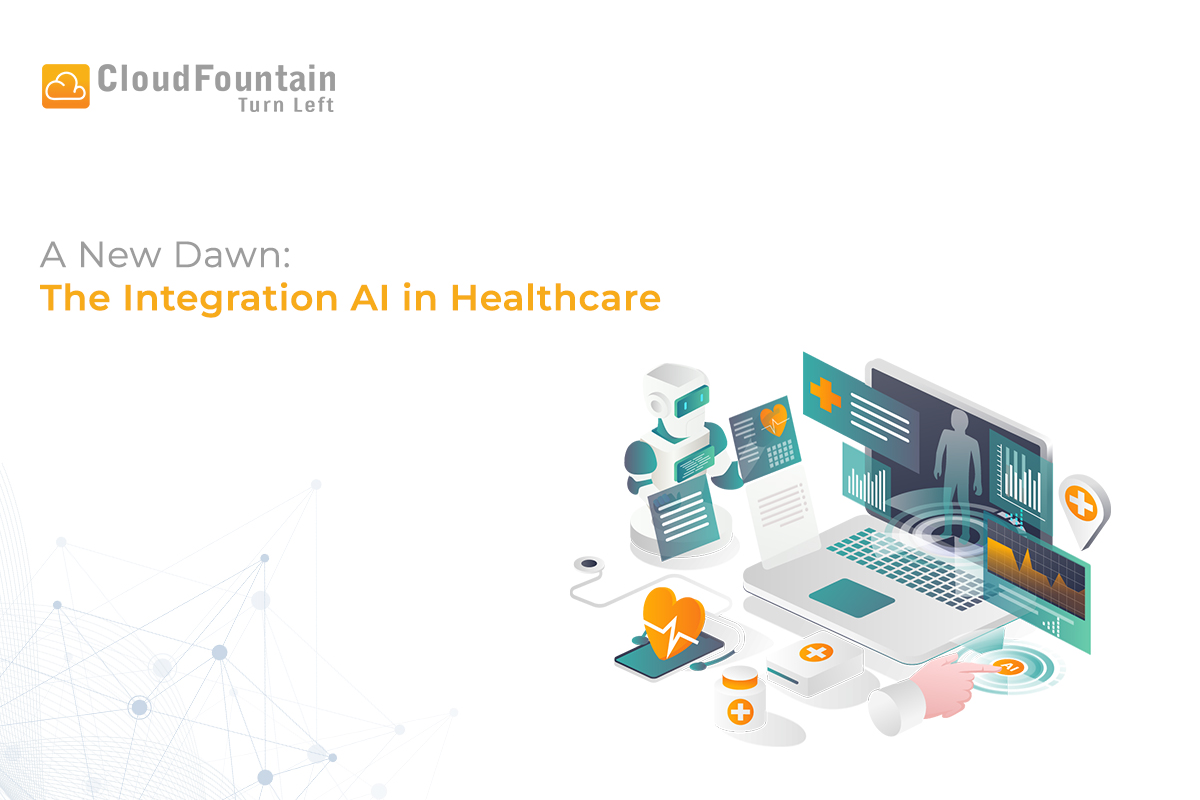
A New Dawn: The Integration of AI in Healthcare

Healthcare has always been about two things: science and compassion. Doctors rely on data, knowledge, and experience, but patients rely on trust, empathy, and care. In recent years, artificial intelligence (AI) in healthcare has begun bridging these two worlds. What started as simple experiments in medical computing has now grown into one of the most transformative movements in modern medicine.

Where It All Began: The Genesis of an Idea

The roots of AI in medicine go back to the 1970s. One of the earliest systems, MYCIN, was designed to help diagnose bacterial infections. It wasn’t perfect, but it showed what was possible: machines could support doctors in decision-making.

Fast forward a few decades, and the rise of machine learning and deep learning changed everything. With faster computers, cloud storage, and electronic health records, AI could finally process massive amounts of data from medical images to lab reports. Instead of just supporting doctors, AI started becoming a genuine partner in diagnosis, treatment planning, and even drug discovery.

The New Trends: A Symphony of Human and Machine

Today, AI has moved beyond theory. It’s actively shaping the way hospitals, clinics, and research centers function. Some of the most exciting AI trends in healthcare include:

  1. AI in Medical Imaging and Diagnostics
    Tools powered by AI are now detecting tumors, fractures, and brain anomalies in scans often earlier and with greater accuracy than humans. This early detection is critical for diseases like cancer.
  2. Predictive Healthcare Analytics
    Hospitals are using AI to predict patient readmissions, detect disease risk, and forecast health outcomes. This not only saves costs but also helps doctors act before conditions worsen.
  3. Personalized Medicine
    By analyzing genetics, lifestyle habits, and medical history, AI designs treatment plans unique to each patient. No more “one-size-fits-all” this is the age of precision healthcare.
  4. AI in Drug Discovery
    What once took a decade in research can now be accelerated by AI models. They identify promising compounds, simulate results, and speed up clinical trials.
  5. Virtual Health Assistants & AI Chatbots
    From answering patient questions to reminding them to take medications, AI assistants are improving patient engagement and reducing hospital workload.
  6. Robotic Surgery and Automation
    Surgical robots enhanced with AI support doctors with unparalleled precision, leading to fewer complications and faster recoveries.

The Future Awaits: A Vision of Proactive Healthcare

The future of AI in medicine looks promising and far-reaching. Here’s what we can expect in the coming years:

  • Preventive and Predictive Care at Scale
    Wearable devices will continuously track vitals like heart rate, oxygen, and glucose levels. With AI analyzing this data, diseases could be spotted before symptoms even appear.
  • Unified Patient Data Systems
    Imagine one intelligent system that combines genetic reports, clinical notes, lifestyle data, and medical images into a single health profile. Doctors could make more holistic, data-driven decisions.
  • Accessible Global Healthcare
    AI-powered diagnostic tools could reach rural and underserved regions, where doctors are scarce, bringing quality care to millions.
  • Ethical and Explainable AI
    As AI becomes more common in healthcare, transparency and ethics will be at the forefront ensuring patients trust the decisions being made with their data.
  • Stronger Human-AI Collaboration
    AI will never replace doctors. Instead, it will handle data-heavy tasks while freeing up healthcare professionals to focus on what truly matters – listening, empathizing, and guiding patients through their healing journey.

The integration of AI in healthcare is not just about machines making decisions it’s about making healthcare smarter, faster, and more human-centered. AI handles the data; doctors handle the heart. Together, they are redefining what it means to live healthier and longer.

From its modest beginnings in rule-based systems to today’s advanced AI models, the journey has been remarkable. And the road ahead promises something even more extraordinary: a world where technology and compassion work hand in hand to transform global health.

FAQs – Frequently Asked Questions

1. What is AI in healthcare?

AI in healthcare refers to the use of artificial intelligence technologies to analyze medical data, assist in diagnosis, improve treatment plans, and enhance patient care.

2. How is AI used in modern healthcare?

AI is used in medical imaging, predictive analytics, personalized medicine, drug discovery, virtual health assistants, and robotic surgeries to improve accuracy and efficiency.

3. What are the benefits of AI in healthcare?

AI helps in early disease detection, faster diagnosis, reduced costs, personalized treatments, improved patient outcomes, and better hospital management.

4. Can AI replace doctors in the future?

No, AI is designed to support doctors, not replace them. It handles data analysis while doctors focus on patient care, empathy, and decision-making.

5. How does AI improve medical diagnosis?

AI analyzes medical images and patient data to detect diseases such as cancer, fractures, and neurological conditions earlier and with high accuracy.

6. What is predictive analytics in healthcare?

Predictive analytics uses AI to analyze patient data and predict future health risks, hospital readmissions, and disease progression.

7. How does AI help in personalized medicine?

AI studies a patient’s genetics, lifestyle, and medical history to create customized treatment plans tailored to individual needs.

8. What role does AI play in drug discovery?

AI accelerates drug discovery by identifying potential compounds, simulating outcomes, and reducing the time required for research and clinical trials.

9. What is the future of AI in healthcare?

The future includes preventive care through wearables, unified patient data systems, global access to healthcare, and ethical AI systems for better transparency.

10. Is AI in healthcare safe and reliable?

AI is continuously improving and, when used with proper validation and ethical standards, it can be highly reliable and safe in supporting medical decisions.