Categories SOC 2 Compliance

SOC 2 Compliance: What It Means for Your Business and How to Achieve It?

What is SOC 2 Compliance for Your Business and How to Achieve It

Maintaining the trust and confidence of customers is paramount for businesses of all sizes. The need for robust security controls and assurances has never been greater. This is where SOC 2 compliance enters the picture as a gold standard for demonstrating a company’s commitment to safeguarding client information.

In this blog post, we’ll explore what SOC 2 compliance is, why it matters for your business, and the essential steps to achieve it.

What is SOC 2 Compliance?

SOC 2, developed by the AICPA, evaluates controls for security, availability, processing integrity, confidentiality, and privacy in service organizations. It offers flexibility, allowing companies to tailor compliance efforts to their unique circumstances.

Unlike SOC 1, which focuses on financial reporting, SOC 2 suits technology and cloud computing firms storing customer data or providing SaaS solutions.

Companies showcase commitment to security and privacy by aligning compliance with relevant risks. This adaptability ensures efficient risk management while bolstering confidence among clients and stakeholders.

Types of SOC 2

Understanding the differentiation between SOC 2 Type I and Type II reports is crucial for organizations seeking to navigate the complexities of compliance effectively. The two types of SOC 2 reports are:

  • SOC 2 Type I: Assesses the design and implementation of controls at a specific point in time.
  • SOC 2 Type II: Evaluates the effectiveness of controls over a specified period, typically a minimum of six months, by assessing both design and operating effectiveness.
Types of SOC 2
By choosing the appropriate type of report based on their needs and objectives, organizations can enhance trust and confidence among clients and stakeholders while mitigating risks associated with data security and privacy.

What are the Trust Service Categories in SOC 2?

Defined by the AICPA, trust service categories serve as fundamental pillars in SOC reports, particularly SOC 2, assessing the reliability, security, and integrity of service organizations’ systems and processes.

SOC 2 Trust Services Criteria
The Five Trust Service Categories are:
  1. Security: Focuses on safeguarding information and systems against unauthorised access, encompassing measures such as access controls, encryption, and monitoring.
  2. Availability: Ensures systems and services are accessible and operational when needed, incorporating redundancy and disaster recovery planning.
  3. Processing Integrity: Concerns the accuracy, completeness, and validity of data processing, ensuring correct operation and accurate transactions.
  4. Confidentiality: Protects sensitive information from unauthorised disclosure, utilising encryption, data classification, and access restrictions.
  5. Privacy: Addresses handling of personal information per privacy laws, encompassing data collection, use, retention, and disclosure controls.

Each trust service category provides a framework for assessing controls’ effectiveness in meeting specific security, availability, processing integrity, confidentiality, and privacy objectives.

By evaluating system design and operation, organizations instill trust and confidence in clients and stakeholders, adhering to regulatory requirements and safeguarding individuals’ privacy rights.

Why SOC 2 Compliance Matters

With growing threats and heightened public awareness of data security, businesses across sectors require suppliers to validate claims with a SOC 2 report. SOC 2 helps companies with:

  • Enhanced Trust and Credibility: SOC 2 compliance demonstrates to customers, partners, and stakeholders that your organization takes data security and privacy seriously. It serves as a seal of approval, providing assurance that your systems and processes meet rigorous industry standards.
  • Competitive Advantage: In today’s competitive landscape, SOC 2 compliance can be a differentiator that sets your business apart from competitors. Many customers prioritise security and compliance when selecting vendors, making SOC 2 certification a valuable asset for winning new business.
  • Risk Mitigation: By implementing the security controls required for SOC 2 compliance, businesses can mitigate the risk of data breaches, cyber-attacks, and other security incidents. Proactively addressing security vulnerabilities helps protect both your organization and your clients from potential harm.

7 Steps to Achieve SOC 2 Compliance
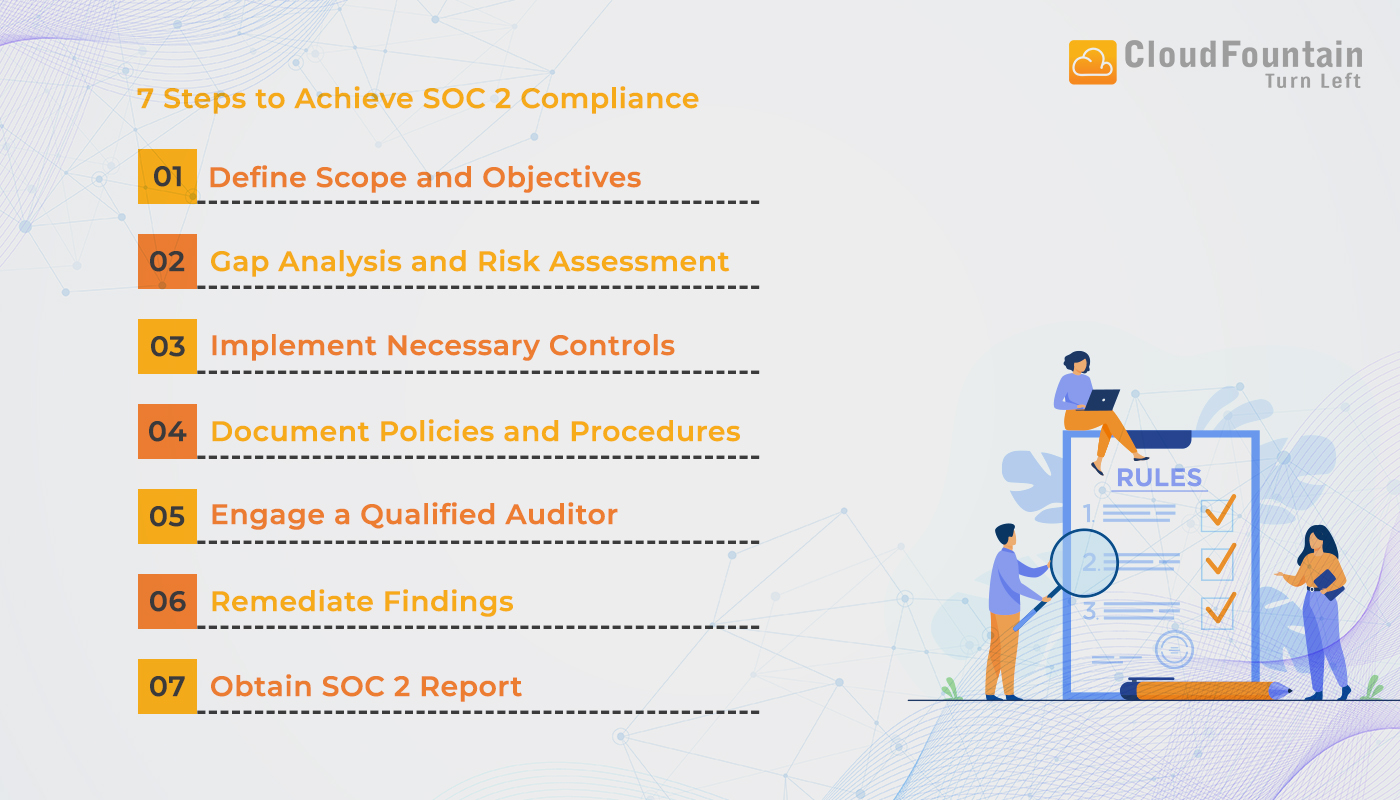
7 Steps to Achieve SOC 2 Compliance

Step 1: Define Scope and Objectives:

Begin by clearly defining the scope of your SOC 2 assessment, including the systems, services, and processes that will be evaluated. Identify the security, availability, processing integrity, confidentiality, and privacy objectives that align with your business goals.

Step 2: Gap Analysis and Risk Assessment:

Conduct a comprehensive gap analysis to identify areas where your current controls may fall short of SOC 2 requirements. Perform a risk assessment to prioritise remediation efforts and allocate resources effectively.

Step 3: Implement Necessary Controls:

Implement and document the controls necessary to meet the criteria outlined in the SOC 2 trust services criteria (TSC). These controls may include access controls, encryption, data backup and recovery procedures, monitoring and logging, and incident response protocols.

Step 4: Document Policies and Procedures:

Develop and document policies and procedures that govern the security, availability, processing integrity, confidentiality, and privacy of data within your organization. Ensure that employees are trained on these policies and understand their roles and responsibilities.

Step 5: Engage a Qualified Auditor:

Select a qualified independent auditor with experience in SOC 2 assessments to conduct the examination of your controls. Work closely with the auditor to provide necessary documentation, facilitate testing procedures, and address any findings or recommendations.

Step 6: Remediate Findings:

Address any deficiencies or findings identified during the SOC 2 examination process promptly. Implement corrective actions and enhancements to strengthen your security posture and ensure compliance with SOC 2 requirements.

Step 7: Obtain SOC 2 Report:

Upon successful completion of the examination, the auditor will issue a SOC 2 report detailing the results of the assessment. Depending on the type of report (Type I or Type II), the report will provide assurance regarding the design and/or operating effectiveness of your controls.

Why Choose CloudFountain as a Partner for SOC Compliance?

Expertise and Experience

CloudFountain specializes in SOC 2 compliance and has deep expertise and experience in implementing controls and processes aligned with the SOC 2 framework. We understand the requirements, nuances, and best practices associated with SOC 2 compliance, which can streamline the compliance process and ensure effectiveness.

  • Efficiency

We help expedite the SOC 2 compliance process by leveraging our established methodologies, templates, and tools. By efficiently assessing the organization’s current state, identify gaps, and develop tailored solutions to address compliance requirements promptly.

  • Risk Management

SOC 2 compliance involves assessing and managing various risks related to security, availability, processing integrity, confidentiality, and privacy. CloudFountain can help identify and prioritise these risks, develop appropriate controls and mitigation strategies, and establish risk management frameworks to enhance overall security posture.

  • Resource Optimization

Engaging with us for SOC 2 compliance allows your organizations to leverage external resources and expertise without overburdening internal teams. This can free up internal staff to focus on core business activities while ensuring that compliance efforts proceed effectively and efficiently.

  • Third-Party Validation

Working with a reputable consultancy for SOC 2 compliance can provide third-party validation of the organization’s controls and processes. This can enhance trust and confidence among clients, partners, and stakeholders, demonstrating the organization’s commitment to security, reliability, and compliance.

  • Customised Solutions

We tailor SOC 2 compliance solutions to meet the specific needs and objectives of the organization. Understanding the organization’s unique risks and requirements, developing customised control frameworks, and providing guidance on implementation and ongoing management.

  • Continuous Support

SOC 2 compliance is an ongoing process that requires continuous monitoring, evaluation, and improvement. CloudFountain can provide ongoing support and guidance to help organizations maintain compliance over time, adapt to evolving threats and regulatory requirements, and address emerging challenges effectively.

At CloudFountain, we’re not just another consultancy – we’re your strategic partner in achieving SOC compliance with confidence and efficiency.  We are your trusted partner for Governance, and Risk And Compliance Services (GRC). With our expertise, we provide comprehensive solutions including SOC 2 Compliance and a range of other risk and compliance services.

Conclusion

Achieving SOC 2 compliance is a significant undertaking that requires dedication, resources, and expertise. However, the benefits of SOC 2 certification far outweigh the challenges, enabling organizations to build trust, mitigate risk, and gain a competitive edge in the marketplace. Choosing a trusted partner like CloudFountain can be key to understanding the requirements, nuances, and best practices of the compliance process. By following the steps outlined in this blog post and embracing a culture of security and compliance, your business can position itself for long-term success in an increasingly digital world.

Related: HIPAA Compliance In Healthcare: Best Practices And Requirements

Categories HIPAA Compliance

HIPAA Compliance in Healthcare: Best Practices and Requirements

HIPAA Compliance in Healthcare - Best Practices and Requirements

In the current Digital Era patient data security is more important than ever. A cornerstone of privacy and security laws in the healthcare sector, the Health Insurance Portability and Accountability Act (HIPAA) seeks to shield patients’ private information from unauthorized access and disclosure.

For healthcare providers and organizations, understanding and adhering to HIPAA compliance requirements are paramount. Let’s delve into the world of HIPAA compliance, exploring best practices and essential requirements to ensure the protection of patient privacy and data security.

Understanding HIPAA Compliance

What is HIPAA Compliance

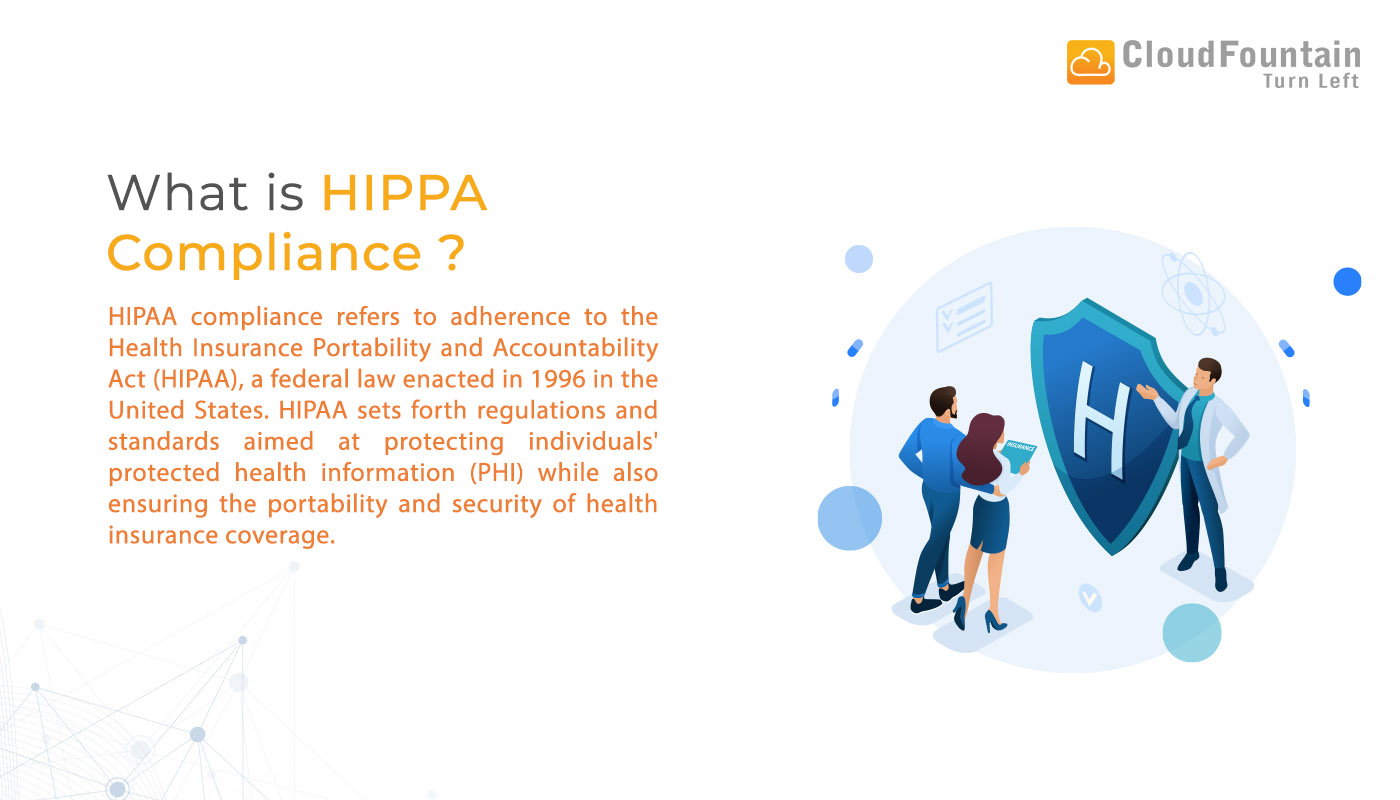
HIPAA, the Health Insurance Portability and Accountability Act, enacted in 1996, is a critical legislation ensuring the privacy and security of individuals’ health information in the United States healthcare system.

Essential HIPAA Compliance Requirements

Essential HIPAA Compliance Requirements

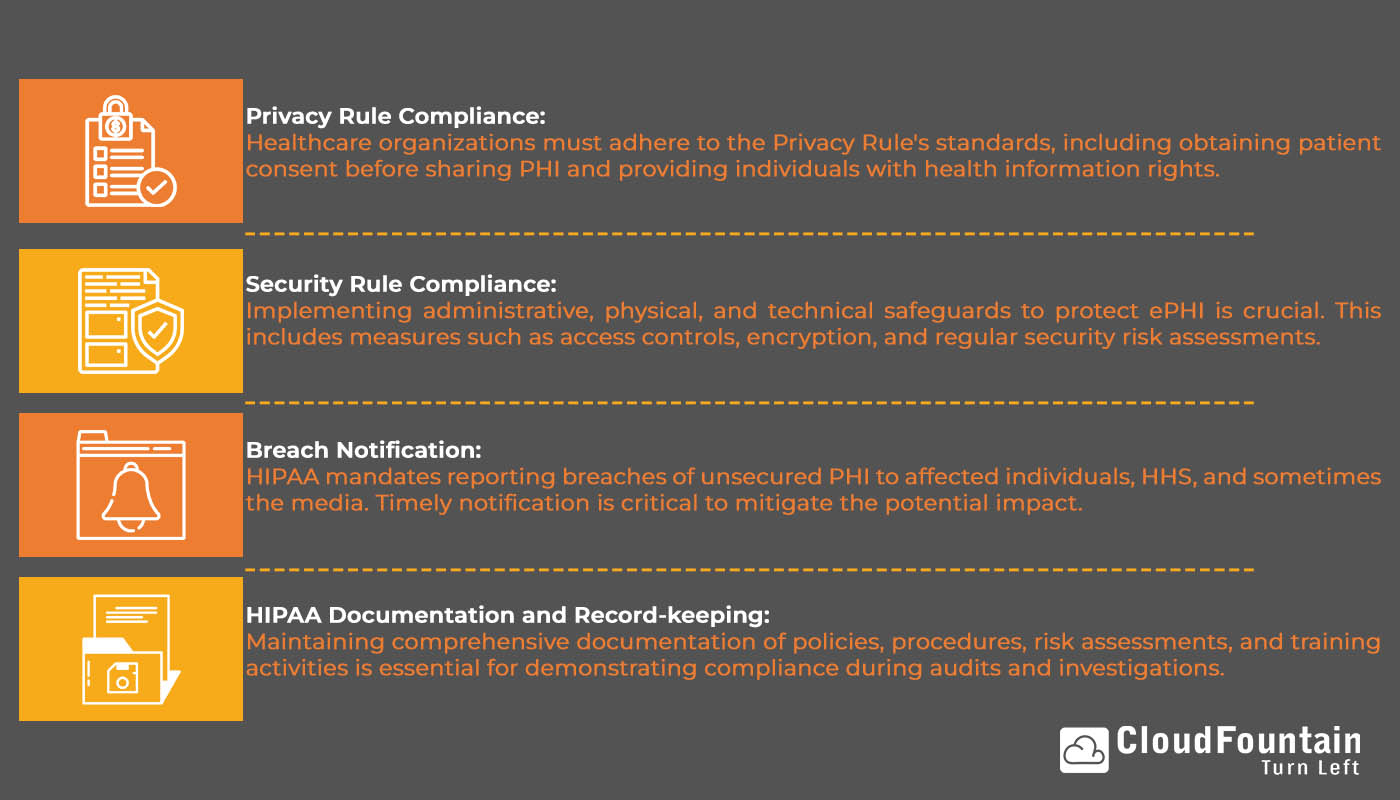
Compliance with HIPAA regulations is imperative for healthcare organizations to protect patient’s privacy and maintain the security of their health information. Essential HIPAA compliance requirements encompass adherence to the Privacy Rule, Security Rule, breach notification protocols, and thorough documentation practices.

Understanding and implementing these requirements are fundamental to ensuring patient trust and regulatory compliance in the healthcare industry:

  1. Privacy Rule Compliance: Healthcare organizations must adhere to the Privacy Rule’s standards regarding the use and disclosure of PHI. This includes obtaining patient consent before sharing their information and providing individuals with rights regarding their health information.
  2. Security Rule Compliance: Implementing administrative, physical, and technical safeguards to protect the confidentiality, integrity, and availability of ePHI is essential for Security Rule compliance. This includes measures such as access controls, encryption, and regular security risk assessments.
  3. Breach Notification: HIPAA mandates that covered entities and their business associates report breaches of unsecured PHI to affected individuals, the Department of Health and Human Services (HHS), and, in some cases, the media. Timely notification is critical to mitigate the potential impact of a breach.
  4. HIPAA Documentation and Record-keeping: Maintaining comprehensive documentation of HIPAA policies, procedures, risk assessments, and training activities is essential for demonstrating compliance during audits and investigations.

Adherence to essential HIPAA compliance requirements is paramount for healthcare organizations to safeguard patients’ protected health information (PHI) and maintain regulatory compliance. Ensuring compliance with essential HIPAA requirements isn’t just a task – it’s a journey. CloudFountain is here to guide you every step of the way with our HIPAA Compliance, Governance and Risk Management Services.

HIPAA compliance is complex. Choosing an experienced partner is not just a wise decision – it’s essential for safeguarding patients’ protected health information (PHI) and avoiding the serious consequences of violating HIPAA regulations.

The risks of non-compliance, including civil monetary penalties, corrective action plans, criminal charges, reputational damage, legal liability, and loss of business opportunities, underscore the importance of having expert guidance and support.

By partnering with CloudFountain, organizations gain access to expertise, resources, and tailored solutions to navigate the complexities of HIPAA compliance effectively. With dedicated support and strategic guidance, organizations can mitigate risks, ensure regulatory compliance, and protect patients’ privacy and security, ultimately safeguarding their reputation and long-term success.

Trust CloudFountain to lead you from compliance confusion to confident compliance mastery, where every milestone becomes a triumph and every challenge an opportunity for growth.

Best Practices for HIPAA Compliance

Maintaining compliance with the Health Insurance Portability and Accountability Act (HIPAA) is paramount for healthcare organizations entrusted with sensitive patient information.

Best practices for HIPAA compliance encompass a range of strategies aimed at safeguarding protected health information (PHI) and electronic protected health information (ePHI) from unauthorized access and disclosure.

From comprehensive employee training to robust breach response plans, these practices form the foundation of a secure and compliant healthcare environment:

  1. Employee Training and Awareness: Comprehensive training programs should be implemented to educate staff about HIPAA regulations, emphasising the importance of safeguarding PHI and ePHI. Regular training sessions and updates ensure that employees remain vigilant and knowledgeable about compliance requirements.
  2. Risk Assessment and Management: Conducting regular risk assessments helps identify potential vulnerabilities in systems, processes, and policies. organizations should develop strategies to mitigate identified risks and continually monitor and update security measures.
  3. Secure Data Storage and Transmission: Implementing robust encryption methods for data storage and transmission adds an extra layer of security, protecting patient information from unauthorized access or interception. Utilizing secure channels and encrypted communication platforms ensures the confidentiality and integrity of ePHI.
  4. Access Control and Authentication: Limiting access to PHI based on the principle of least privilege reduces the risk of unauthorized Implementing strong authentication protocols such as multi-factor authentication (MFA) ensures that only authorised personnel can access sensitive information.
  5. Breach Response Plan: Despite robust preventive measures, data breaches can still occur. Having a comprehensive breach response plan in place enables organizations to respond promptly and effectively in the event of a security incident. This includes notifying affected individuals, regulatory bodies, and implementing measures to mitigate further damage.
  6. Business Associate Agreements (BAAs): Working with third-party vendors or business associates requires the establishment of BAAs to ensure that they adhere to HIPAA regulations. These agreements outline the responsibilities of the business associate concerning the protection of PHI and ePHI.
  7. Regular Audits and Compliance Monitoring: Conducting regular audits and assessments of internal processes and systems helps ensure ongoing compliance with HIPAA regulations. Monitoring changes in regulations and industry best practices allows organizations to adapt their compliance strategies accordingly.

By prioritising employee training, risk assessment, secure data storage, access control, breach response planning, business associate agreements, and regular audits, organizations can mitigate the risk of data breaches and ensure ongoing compliance with HIPAA regulations.

Embracing these practices not only protects patient information but also fosters trust and confidence among stakeholders, reinforcing the commitment to maintaining the highest standards of healthcare data security and privacy.

Final Thought

In conclusion, achieving and maintaining HIPAA compliance requires a concerted effort from healthcare organizations, supported by robust policies, procedures, and technological safeguards.

By prioritising patient privacy and data security, healthcare providers can fulfill their ethical and legal obligations while building trust with patients and stakeholders. Embracing best practices and staying abreast of evolving regulatory requirements are key to navigating the complex landscape of HIPAA compliance in healthcare. Choosing an Experienced HIPAA Consulting Partner like CloudFountain opens up access to resources and tailored solutions. By adhering to these principles, healthcare organizations can ensure the protection of patient information while fulfilling their mission of delivering quality care.

Related: What is SOC 2 Compliance For Your Business and How To Achieve It?

Categories Amazon Web Service

Trends and Innovations in AWS Services

Trends and Innovations in AWS Services

In the ever-changing field of cloud computing, Amazon Web Services (AWS) stands at the forefront of innovation, consistently introducing new features and services that redefine the possibilities of digital transformation. As we venture further into the era of cloud computing, let’s delve into the exciting trends and innovations shaping AWS services and reshaping the way businesses operate.

The Rise of Serverless Computing with AWS Lambda

The use of serverless computing has been one of the most notable trends in recent years, and AWS Lambda has led the way in this area. With serverless architecture, developers can focus solely on writing code without the need to manage servers. AWS Lambda allows for seamless execution of code in response to events, offering a cost-effective and scalable solution. The trend towards serverless computing reflects a paradigm shift in application development, emphasizing agility and efficiency.

Containerization and AWS Fargate

Modern application development now relies heavily on containerization, to which AWS has reacted with AWS Fargate. Fargate enables users to run containers without the need to manage the underlying infrastructure. This abstraction of infrastructure management simplifies the deployment and scaling of containerized applications, fostering a more efficient and streamlined development process. As businesses increasingly embrace containerization, AWS Fargate remains at the forefront of this transformative trend.

Advancements in Machine Learning with Amazon SageMaker and SageMaker Studio

Machine Learning (ML) continues to be a game-changer for businesses seeking intelligent insights from their data. Amazon SageMaker, AWS’s fully managed ML service, has witnessed significant enhancements. From simplified model training to deployment at scale, SageMaker empowers developers and data scientists to build, train, and deploy ML models with ease. The democratization of machine learning through services like SageMaker signifies a shift towards making advanced analytics accessible to a broader audience.

Amazon SageMaker Studio is a comprehensive integrated development environment (IDE) designed by Amazon Web Services (AWS) for Machine Learning (ML) and data science tasks. It streamlines the ML workflow by providing a unified interface equipped with a wide range of tools. Within this environment, users can leverage a notebook interface reminiscent of Jupyter notebooks, tailored with pre-configured environments for leading ML frameworks like TensorFlow and PyTorch. One of its key features is experiment management, facilitating organization, tracking, and comparison of ML experiments.

Data Lakes and Analytics with Amazon S3 and AWS Glue

The exponential growth of data has led to a surge in demand for robust data storage and analytics solutions. Amazon S3 remains a stalwart in scalable and durable object storage, while AWS Glue simplifies the process of building and managing data lakes. The trend toward centralizing and analyzing vast datasets underscores the importance of data-driven decision-making. AWS services, such as S3 and Glue, are pivotal in enabling businesses to harness the power of their data for strategic insights.

Networking Innovations: AWS Transit Gateway and Beyond

Networking is the backbone of cloud infrastructure, and AWS has introduced innovations to simplify and enhance connectivity. AWS Transit Gateway, for instance, streamlines network architecture, allowing for centralized management of connectivity across multiple Amazon Virtual Private Clouds (VPCs). This trend towards simplification and consolidation in networking reflects AWS’s commitment to providing scalable and efficient solutions for complex network infrastructures.

The Growing Role of Edge Computing with AWS Wavelength

Edge computing has emerged as a transformative trend, bringing computing power closer to the end-users. AWS Wavelength extends the capabilities of AWS to the edge of the 5G networks, enabling ultra-low latency and high-bandwidth applications. This innovation is particularly crucial for applications requiring real-time responsiveness, such as augmented reality, gaming, and IoT solutions. As edge computing gains prominence, AWS Wavelength positions itself as a key player in this evolving landscape.

Making Informed decisions to incorporate AWS into your workflow

CloudFountain works with Amazon professional services as certified AWS professional services consultants to deliver specialized solutions for your unique cloud goals. Our skilled experts provide thorough AWS Consulting Services in USA, making us a dependable partner for your cloud endeavors – regardless of your size – for both tiny start-ups and major enterprises. Our skilled team of designers and developers is skilled in creating efficient cloud apps. In order to create custom applications with the necessary features, we analyze your requirements. Our committed customer support team is available around the clock to respond to your questions and offer prompt assistance with your AWS requirements.

Conclusion

Keeping up with the latest developments and trends in the ever-changing world of AWS services is crucial for companies looking to gain a competitive advantage. Whether leveraging serverless computing, containerization, machine learning, data analytics, networking advancements, or edge computing, AWS continues to be a driving force in shaping the future of cloud technology.

As we navigate the AWS horizon, embracing these trends opens up new possibilities for innovation, scalability, and efficiency. The evolving landscape of AWS services exemplifies a commitment to meeting the diverse needs of businesses in an ever-changing digital landscape. In this era of continuous transformation, businesses can leverage these trends to not only keep pace with industry changes but to lead the way in shaping the future of cloud computing with AWS.

Categories Amazon Web Service

How to Choose the Right AWS Compute, Storage and Database Services for your Business

How to Choose the Right AWS Compute, Storage and Database Services for Your Business

Within the dynamic field of cloud computing, Amazon Web Services (AWS) has become the preferred choice for companies looking for unmatched innovation, scalability, and flexibility.

As a top Serverless App Development Firm in the USA, CloudFountain, we are aware of how important AWS is to changing the digital landscape. Our goal in writing this blog article is to assist companies in selecting the best AWS services for their particular requirements and goals.

Understanding Your Business Requirements

AWS, as the #1 cloud service provider, offers a diverse range of services spanning compute, storage, databases, machine learning, analytics, and networking. However, the key lies in selecting the right combination of services that aligns with your business requirements. Here’s a step-by-step guide to ensure you make informed decisions:

Before delving into AWS services, it’s crucial to have a clear understanding of your business objectives, technical requirements, and growth projections. Consider the following factors:

  • Business Goals: Identify your short-term and long-term business goals. Are you looking to enhance scalability, improve data analytics, or optimize costs? Your goals will guide your AWS service selection.
  • Technical Requirements: Define the technical aspects of your project. What kind of applications are you developing? Do you require database services, machine learning capabilities, or server-less computing?
  • Compliance and Security: Assess any compliance or security standards relevant to your industry. AWS provides a robust security framework, and understanding your specific compliance needs is essential.
  • Budget Constraints: Establish a budget for your AWS usage. AWS offers a pay-as-you-go model, but understanding the cost implications of different services helps in budget planning.

Now that you know different parameters to consider before choosing AWS let’s see different AWS service categories.

Navigating the AWS Service Categories

AWS provides a comprehensive set of services, categorized into compute, storage, databases, machine learning, analytics, networking, and more. Let’s break down key considerations for each category:

Compute Services

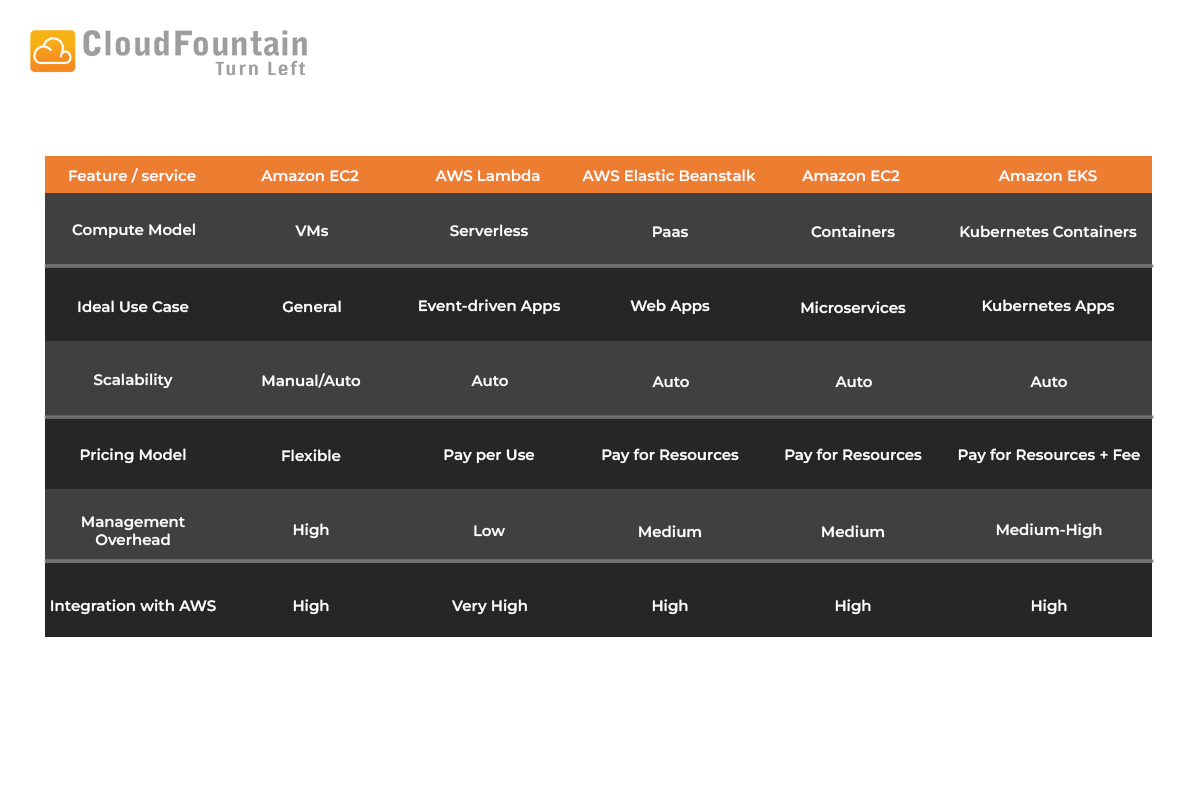
  1. Amazon EC2 (Elastic Compute Cloud): Virtual servers in the cloud.
  • Compute Model: Virtual Machines (Instances).
  • Ideal Use Case: General purpose, flexible compute capacity for every workload.
  • Scalability: Manual/Auto Scaling Groups.
  • Pricing Model: On-Demand, Reserved Instances, Spot Instances, Saving Plans.
  • Management Overhead: High (managing servers).
  • Integration with AWS: High
  1. AWS Lambda: Event-driven, serverless computing platform.
  • Compute Model: Serverless Functions
  • Ideal Use Case: Event-driven applications, Microservices.
  • Scalability: Automatically scales with the number of events.
  • Pricing Model: Pay per request and compute time.
  • Management Overhead: Low (no servers to manage).
  • Integration with AWS Services: Very High.
  1. AWS Elastic Beanstalk: Easy-to-use service for deploying applications which automates the deployment of applications in the cloud.
  • Compute Model: PaaS (Platform as a Service).
  • Ideal Use Case: Web applications and services.
  • Scalability: Auto Scaling.
  • Pricing Model: Pay for underlying AWS resources used.
  • Management Overhead: Medium (AWS handles deployment, capacity provisioning, load balancing, and auto-scaling).
  • Integration with AWS Services: High
  1. Amazon ECS (Elastic Container Service): Highly scalable, high-performance container management service.
  • Compute Model: Containers
  • Ideal Use Case: Microservices architecture, applications requiring containers.
  • Scalability: Auto Scaling.
  • Pricing Model: Pay for AWS resources used.
  • Management Overhead: Medium (manage instances or use Fargate for serverless).
  • Integration with AWS Services: High
  1. Amazon EKS (Elastic Kubernetes Service): Managed Kubernetes service.
  • Compute Model: Kubernetes Containers.
  • Ideal Use Case: Kubernetes applications, Microservices.
  • Scalability: Auto Scaling.
  • Pricing Model: Pay for AWS resources used plus a monthly fee per EKS cluster.
  • Management Overhead: Medium to High (simplifies running Kubernetes but requires Kubernetes knowledge).
  • Integration with AWS Services: High.

AWS Compute Services

Storage Services

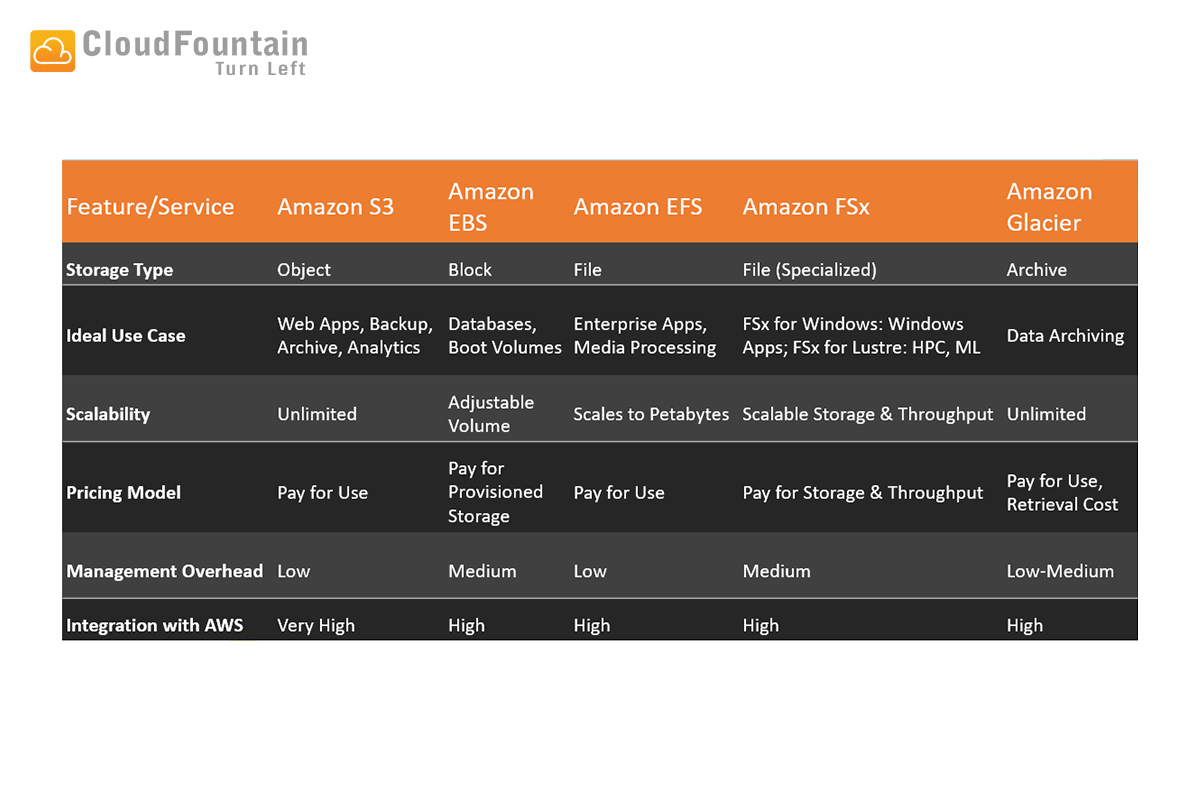
  1. Amazon S3 (Simple Storage Service): Object storage service that offers industry-leading scalability, data availability, security, and performance.
  • Storage Type: Object Storage.
  • Ideal Use Case: Web applications, backup and restore archive, and big data analytics.
  • Scalability: Unlimited storage, scales automatically.
  • Pricing Model: Pay for storage used, requests, and data transfer.
  • Management Overhead: Low (fully managed, simple to use).
  • Integration with AWS Services: Very High.
  1. Amazon EBS (Elastic Block Store): High-performance block storage service designed for use with Amazon EC2 for both throughput and transaction-intensive workloads.
  • Storage Type: Block Storage.
  • Ideal Use Case: Databases, file systems, and boot volumes of EC2 instances.
  • Scalability: Volume size can be increased, and snapshots can be taken.
  • Pricing Model: Pay for provisioned storage, and snapshots.
  • Management Overhead: Medium (requires EC2 instance for use).
  • Integration with AWS Services:
  1. Amazon EFS (Elastic File System): Fully managed file storage service that makes it easy to set up and scale file storage in the Amazon Cloud.
  • Storage Type: File Storage.
  • Ideal Use Case: Lift-and-shift enterprise applications, media processing workflows, content management, and web serving.
  • Scalability: Scales on-demand to petabytes without disrupting applications.
  • Pricing Model: Pay for storage used.
  • Management Overhead: Low (fully managed, easy to use).
  • Integration with AWS Services: High.
  1. Amazon FSx: Fully managed third-party file storage services. It includes Amazon FSx for Windows File Server and Amazon FSx for Lustre.
  • Storage Type: File Storage (Specialized).
  • Ideal Use Case: FSx for Windows: Windows-based applications. FSx for Lustre: High-performance computing, machine learning, media data processing.
  • Scalability: Scalable storage and throughput.
  • Pricing Model: Pay for storage and throughput capacity.
  • Management Overhead: Medium (managed, but setup and optimization depend on the specific FSx service).
  • Management Overhead: Medium (managed, but setup and optimization depend on the specific FSx service).
  1. Amazon Glacier: Extremely low-cost storage service that provides secure, durable, and flexible storage for data archiving and online backup.
  • Storage Type: Archive Storage.
  • Ideal Use Case: Long-term data archiving with infrequent access.
  • Scalability: Unlimited storage, scales automatically.
  • Pricing Model: Pay for storage used, retrieval costs vary by speed.
  • Management Overhead: Low to Medium (simple to store data, but retrieval requires planning).
  • Integration with AWS Services: High

AWS Storage Services

Database Services

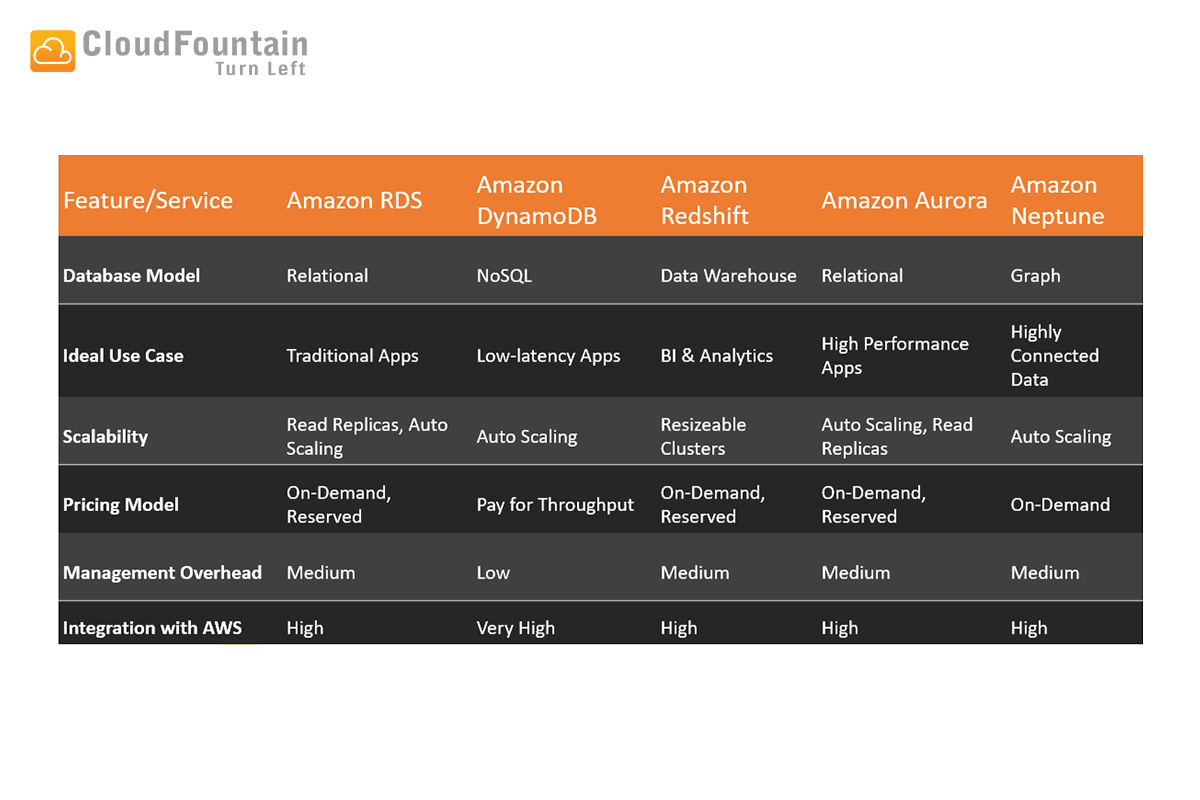
  1. Amazon RDS (Relational Database Service): Simplifies setup, operation, and scaling of a relational database in the cloud.
  • Database Model: Relational.
  • Ideal Use Case: Traditional applications, ERP, CRM, and e-commerce applications with structured data.
  • Scalability: Read replicas, snapshots, and automatic scaling.
  • Pricing Model: On-Demand and Reserved Instances.
  • Management Overhead: Medium (managed service but requires database management skills).
  • Integration with AWS Services: High.
  1. Amazon DynamoDB: Fast and flexible NoSQL database service for any scale.
  • Database Model: NoSQL.
  • Ideal Use Case: Mobile, web, gaming, ad tech, IoT, and many other applications that need low-latency data access at any scale.
  • Scalability: Automatically scales to adjust for capacity and maintain performance.
  • Pricing Model: Pay for read/write throughput and stored data.
  • Management Overhead: Low (fully managed).
  • Integration with AWS Services: Very High.
  1. Amazon Redshift: Fast, scalable data warehouse that makes it simple and cost-effective to analyze all your data across your data warehouse and data lake.
  • Database Model: Data Warehouse.
  • Ideal Use Case: Business intelligence, running complex queries and aggregations on large volumes of data.
  • Scalability: Resizeable clusters and concurrency scaling.
  • Pricing Model: On-Demand and Reserved Instances.
  • Management Overhead: Medium (managed service but complex setup for optimization).
  • Integration with AWS Services: High.
  1. Amazon Aurora: MySQL and PostgreSQL – compatible relational database built for the cloud that combines the performance and availability of high-end commercial databases with the simplicity and cost-effectiveness of open-source databases.
  • Database Model: Relational (MySQL and PostgreSQL compatible).
  • Ideal Use Case: Enterprise applications requiring high performance and availability.
  • Scalability: Automatic scaling, read replicas.
  • Pricing Model: On-Demand and Reserved Instances.
  • Management Overhead: Medium (simpler management than traditional relational databases).
  • Integration with AWS Services: High.
  1. Amazon Neptune: Fast, reliable, fully managed graph database service that makes it easy to build and run applications that work with highly connected datasets.
  • Database Model: Graph.
  • Ideal Use Case: Knowledge graphs, fraud detection, recommendation engines, social networking.
  • Scalability: Automatic scaling for read replicas.
  • Pricing Model: On-Demand.
  • Management Overhead: Medium (managed service but requires understanding of graph databases).
  • Integration with AWS Services: High

AWS Database Services

Machine Learning and Analytics

  1. Amazon SageMaker: Simplifies the process of building, training, and deploying machine learning models.
  2. Amazon Redshift: A fully managed data warehouse for analytics. Ideal for running complex queries on large datasets.

Networking Services

  1. Amazon VPC (Virtual Private Cloud): Allows you to provision a logically isolated section of the AWS Cloud. Essential for network customization.
  2. Amazon Route 53: A scalable domain name system (DNS) web service for routing end-user requests to globally distributed endpoints.

Making Informed Decisions

Here are the steps required to make informed decisions for choosing AWS service:

  • Evaluate Service Integration: Consider how well the selected AWS services integrate with each other. Seamless integration ensures a cohesive and efficient cloud architecture.
  • Scalability and Flexibility: Choose services that scale horizontally to accommodate growth. Flexibility is key to adapting to changing business demands.
  • Security and Compliance: Leverage AWS security features and select services compliant with your industry regulations. This is crucial, especially for sensitive data handling.
  • Cost Optimization: Regularly review and optimize your AWS usage. AWS offers tools like AWS Cost Explorer to help you monitor and manage costs effectively.
  • Stay Updated with AWS Innovations: AWS regularly introduces new services and updates existing ones. Stay informed about these innovations to continually optimize your cloud infrastructure.

By aligning your business goals with the extensive array of AWS services, you can build a robust and scalable cloud infrastructure tailored to your specific needs. Regularly reassess your choices based on evolving business requirements and take advantage of AWS’s flexibility to innovate and stay ahead in the cloud era.

Why choose CloudFountain for your AWS journey?

As certified AWS professional services consultants, we collaborate with Amazon professional services to provide tailored solutions for your distinct cloud objectives. Whether you’re a small startup or a large enterprise, our qualified developers offer comprehensive AWS Consulting Services in USA, making us a reliable partner for your cloud endeavors. Our team of seasoned developers and designers are adept at building effective cloud applications. We analyze your requirements to provide custom applications with relevant capabilities. Our dedicated client servicing team is always ready to answer your queries and provide immediate support for your AWS needs.

Final Thoughts

In summary, using the AWS cloud effectively necessitates a strategic plan based on your company’s goals. With CloudFountain as your AWS Consulting Partner, you gain access to a wealth of experience, expertise, and ongoing support to ensure your cloud journey is not only successful but also transformative for your business. With confidence, embrace AWS’s power, and let CloudFountain lead you to unmatched success in the cloud era.

Categories Digital Transformation

The Impact of Digital Transformation on Customer Experience

The Impact of Digital Transformation on Customer Experience

With the increased focus on digital transformation in business strategy, every business strives to optimize their processes using a digital transformation strategy and get the most out of technological integration. This would result in an improved bottom line, the organization’s net profit, and the inclusion of digital transformation into business processes.

In this blog, we will explore the impact of digital transformation on the customer experience and ways to transform your business using new technologies.

What is Digital Transformation?

Digital transformation serves as a transformative journey that harnesses the power of digital technologies to either create new or reshape existing business processes, corporate culture, and customer experiences in alignment with the ever-evolving market dynamics. This isn’t just a makeover for traditional roles like sales, marketing, and customer service; it’s a complete shift in how your business perceives and engages with customers. Now, let’s see ways digital transformation and customer experience are connected with each other.

How Does Technology Influence Customer Experience?

Advantages of Adopting A Digital Model

Improving customer experiences in a variety of businesses is greatly aided by digital transformation. Businesses may improve the consistency, personalization, and effectiveness of their consumer experiences by utilizing digital technologies and rethinking corporate procedures.

For instance, 55% of consumers expect better customer service year-on-year – particularly 18-34 year-olds, 70% of who indicated rising expectations looking forward.

Keeping up with this level of expectation requires consistency in customer-facing processes like customer support and effective communication. Real-time data can help businesses by enabling them to respond promptly to customer needs, personalize interactions, and make data-driven decisions.

Impact of Digital Transformation on Customer Experience

  • The Digital Transformation ProcessPersonalization: Digital transformation enables businesses to collect and analyze vast amounts of customer data. With this data, organizations can create personalized experiences tailored to individual preferences, behaviors, and demographics. Personalization can occur in marketing messages, product recommendations, and overall user interfaces, enhancing the relevance and engagement of customer interactions.
  • Multi-Channel Engagement: Digital transformation allows businesses to interact with customers across various channels, such as websites, mobile apps, social media, and email. This multi-channel approach ensures that customers can engage with a brand through their preferred channels, providing a consistent and integrated experience.
  • Improved Accessibility: Through digital channels, businesses can offer 24/7 accessibility to products, services, and support. Customers can make purchases, access information, and seek assistance at any time, increasing convenience and responsiveness.
  • Automation for Efficiency: Automation of routine tasks and processes streamlines operations, allowing organizations to provide faster response times and more efficient customer service. Automation can be applied to customer support, order processing, and other functions, freeing up human resources for more complex and value-added activities.
  • Data-Driven Insights: Digital transformation facilitates the collection and analysis of customer data. This data-driven approach provides valuable insights into customer behaviors, preferences, and trends. Organizations can use these insights to make informed decisions, refine strategies, and continuously improve the customer experience.
  • Enhanced Customer Service: Digital technologies, such as chatbots, virtual assistants, and AI-driven customer support systems, enhance the efficiency and effectiveness of customer service. These tools can provide instant responses, personalized assistance, and round-the-clock support.
  • Easier Transactions: Digital transformation simplifies and accelerates the transaction process. Online shopping, digital payments, and mobile app functionalities make it easier for customers to make purchases and interact with businesses seamlessly.
  • Innovative Products and Services: Digital transformation often leads to the creation of innovative products and services that cater to changing customer needs. Businesses can leverage emerging technologies to introduce new offerings and stay ahead of market trends.
  • Real-Time Engagement: With digital tools and platforms, businesses can engage with customers in real-time. Whether through social media interactions, live chats, or personalized notifications, real-time engagement contributes to a more dynamic and responsive customer experience.
  • Adaptability and Agility: Digital transformation equips organizations with the tools and mindset needed to adapt to evolving customer expectations and market dynamics. This adaptability is crucial for staying relevant and competitive in a rapidly changing business environment.

Also Read: Empowering Your Business through Digital Transformation Services: A Step-by-Step Approach

Experiences that are efficient, inventive, and focused on the needs of the client are made possible through digital transformation. In the digital age, businesses may maintain their competitiveness and create enduring client relationships by adopting digital technologies and reimagining business procedures.

Many people think that digital transformation is only limited to changing infrastructure for cost-cutting or simply integrating new technologies into existing processes. But that is not true.

Building a digital transformation strategy specific to your industry is the game changer that makes digital transformation work best for your organization. Read on to learn about the role of digital transformation consulting in enabling businesses to integrate digital transformation.

How to Improve Customer Experience through Digital Transformation?

Digital transformation consulting plays a crucial role in guiding and supporting businesses through the process of integrating digital transformation initiatives. Here are several key aspects of the role of digital transformation consulting –  CloudFountain enabling businesses to effectively adopt and implement digital transformation:

  • Services Offered: Cloud Fountain provides digital transformation consulting services aimed at modernizing legacy systems, automating critical processes, and elevating businesses to meet the demands of the digital age.
  • Prudent Risk Management: We emphasize the importance of prudent risk management in every digital step. This indicates a strategic and cautious approach to digital transformation, ensuring that innovations are well-planned, targeted, sustainable, and aligned with the budgetary constraints of their clients.
  • Innovation Alignment: CloudFountain emphasizes the alignment of their innovations with client goals and budget limitations. This suggests a client-centric approach where digital initiatives are not only technologically advanced but also practical and financially feasible for the businesses they serve.
  • Blend of Digital Expertise and Industry Insight: We combine digital expertise with industry insight. This blend allows us to understand not only the technological aspects but also the specific challenges and opportunities within the industries they work with.
  • Exceptional Customer Journeys: CloudFountain aims to go beyond expectations by creating exceptional customer journeys. This involves leveraging tools such as analytics, automation, and artificial intelligence (AI) to enhance the overall experience for both businesses and their customers.
  • Collaboration with Businesses: The digital transformation experts at CloudFountain work closely with businesses. This collaborative approach involves identifying gaps in existing systems and processes, providing valuable data, and ultimately formulating the best digital strategies for their clients.

The digital transformation consulting services offered by CloudFountain are distinguished by a strategic emphasis on risk management, budgetary and client demand alignment, a blend of industry and digital expertise, and a dedication to developing exceptional customer journeys. Their customized and customer-focused consulting services are highlighted by their emphasis on teamwork and supplying crucial data.

Final Thought

As the blog explores, digital transformation is more than just an increase in technology. It entails a deliberate change in the way companies view and interact with consumers to provide a smooth and customized experience. Numerous factors, like personalization, multi-channel engagement, enhanced accessibility, and the efficient use of real-time data, are indicative of the impact on consumer experiences.